What it is
APR tells you what a year of lending or borrowing is worth, as a plain percentage. It counts only what your first amount earns. Anything you earn along the way just sits there, earning nothing more. People often read it as the same thing as apy, but the APY of the same deal is always a little higher.
You'll also hear it called the interest rate, or the simple rate. On loans it's the borrow rate, and on deposits the supply rate. What tells it apart from APY is one thing: nothing earned along the way earns again.
Example
Say you lend $1,000 at 10% APR. Each day a small payment lands, and you take it out to spend. A year later you've earned $100, and your $1,000 is still there. If you'd left those payments in to earn too, you'd have earned closer to $105. When you want out, you take back your $1,000 plus whatever you haven't spent.
In the apps
One app lets you flip between the two rates, the other shows lending and borrowing side by side.
 Jupiter
On Jupiter's pool page, a small switch turns the headline rate from APY into APR.
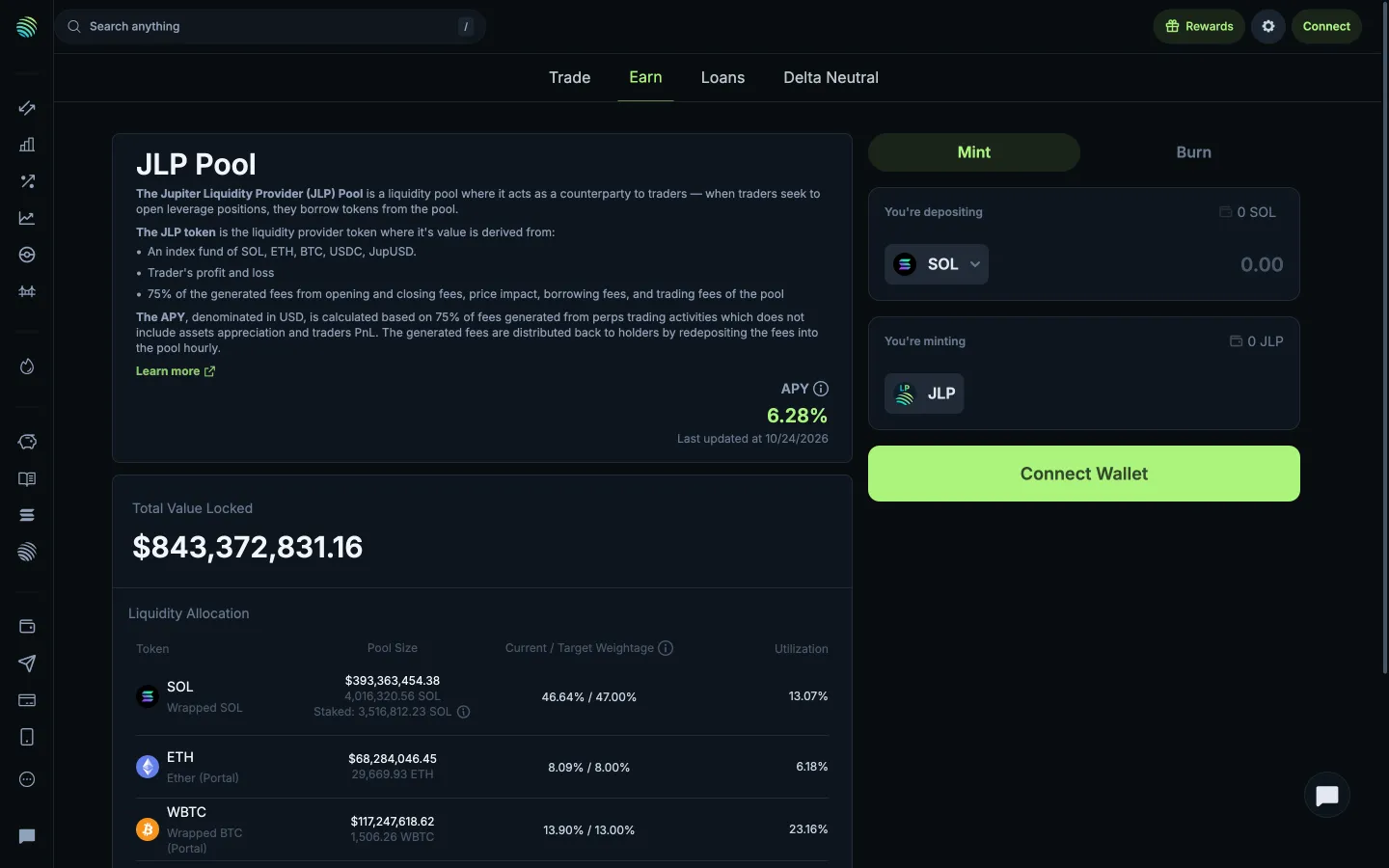
JLP annual percentage yield
1 / 2Does well: The same pool reads 6.28% one way and 6.09% the other, so you see the gap for yourself.
Gets wrong: After the switch, the text above still says "The APY", so the words and the number disagree.
 Morpho
's fixed rate market lists the rate to borrow and the rate to lend, each marked APR.
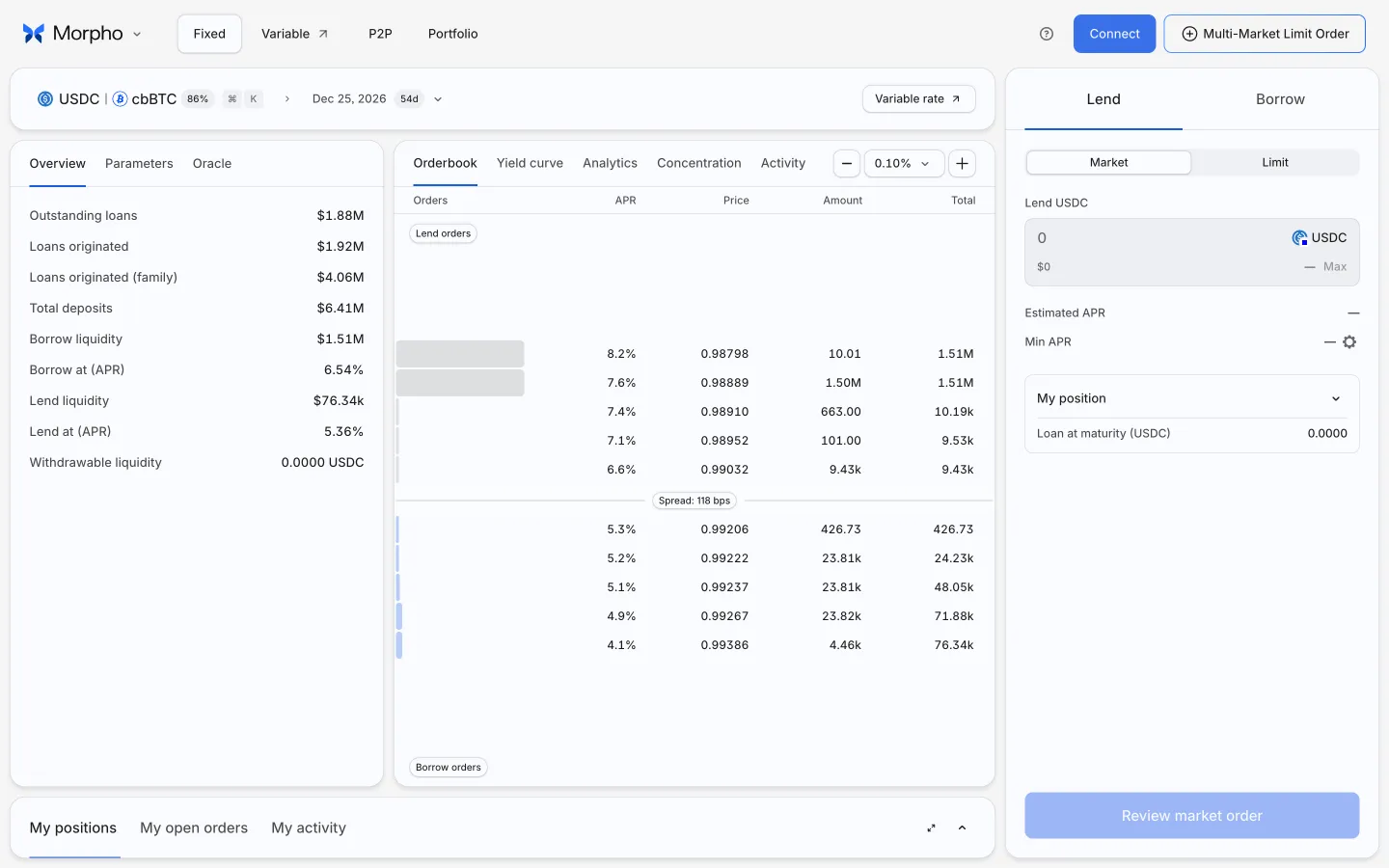
Review the market and orderbook
1 / 4Does well: The two rates sit on separate rows, so a lender never mistakes the borrow rate for their own.
Gets wrong: The order list shows rates and prices but no dollars, so you work out what a loan costs yourself.
There's more where these came from: every screen in the library that says “APR”.
What to design for
APR and APY look alike, so the screen has to keep them apart.