What it is
When you borrow in crypto, you put something down first, like a deposit. If that deposit loses too much value, the app sells some of it to get its money back, without asking you. It usually doesn't take everything, just enough to cover the loan, plus a fee.
You'll also hear it called a margin call. Lending apps show a health factor, a score that drops toward 1 as you get close. Trading apps show a liquidation price instead.
Example
Say you put down $1,000 of ETH and borrow $700. A few days later the price of ETH drops, and your deposit is only worth $875. That's the app's limit. One more dip, and it sells some of your ETH to pay itself back. You didn't press anything. It just happened. If you'd added a little more ETH when the price started to slide, you'd have been fine.
In the apps
Some apps show this danger as a score, others as a price.
 Aave Pro
, an app for borrowing, lists its rules before you borrow anything.
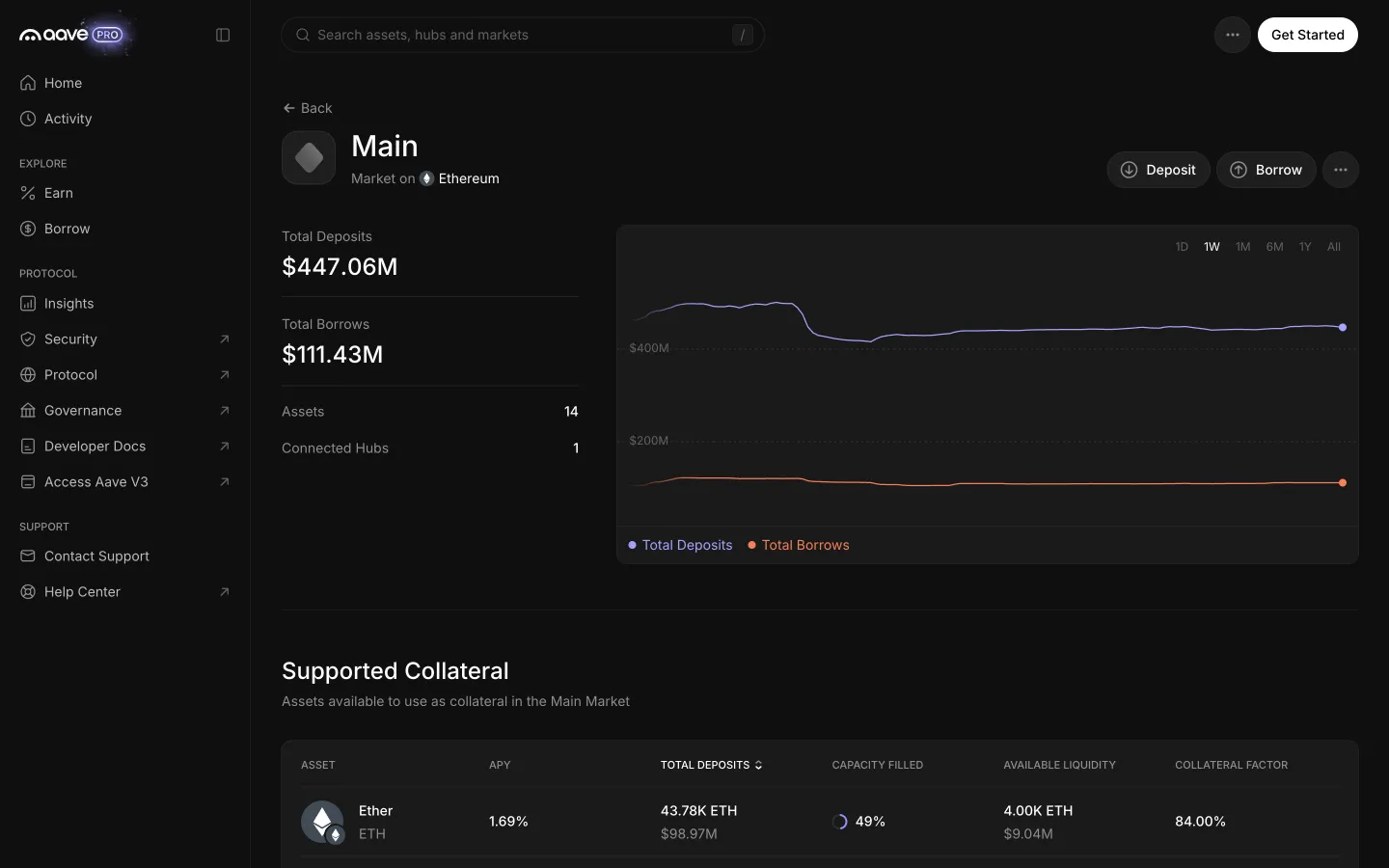
Main Market read top to bottom
1 / 3Does well: It tells you the fee up front, 5 to 8%, so you know what a sale would cost you.
Gets wrong: It explains the target health factor with the same words, so a newcomer learns nothing.
 Polymarket
When you trade with borrowed money on Polymarket, the price where you'd be closed out sits right under the slider that sets how much you borrow.
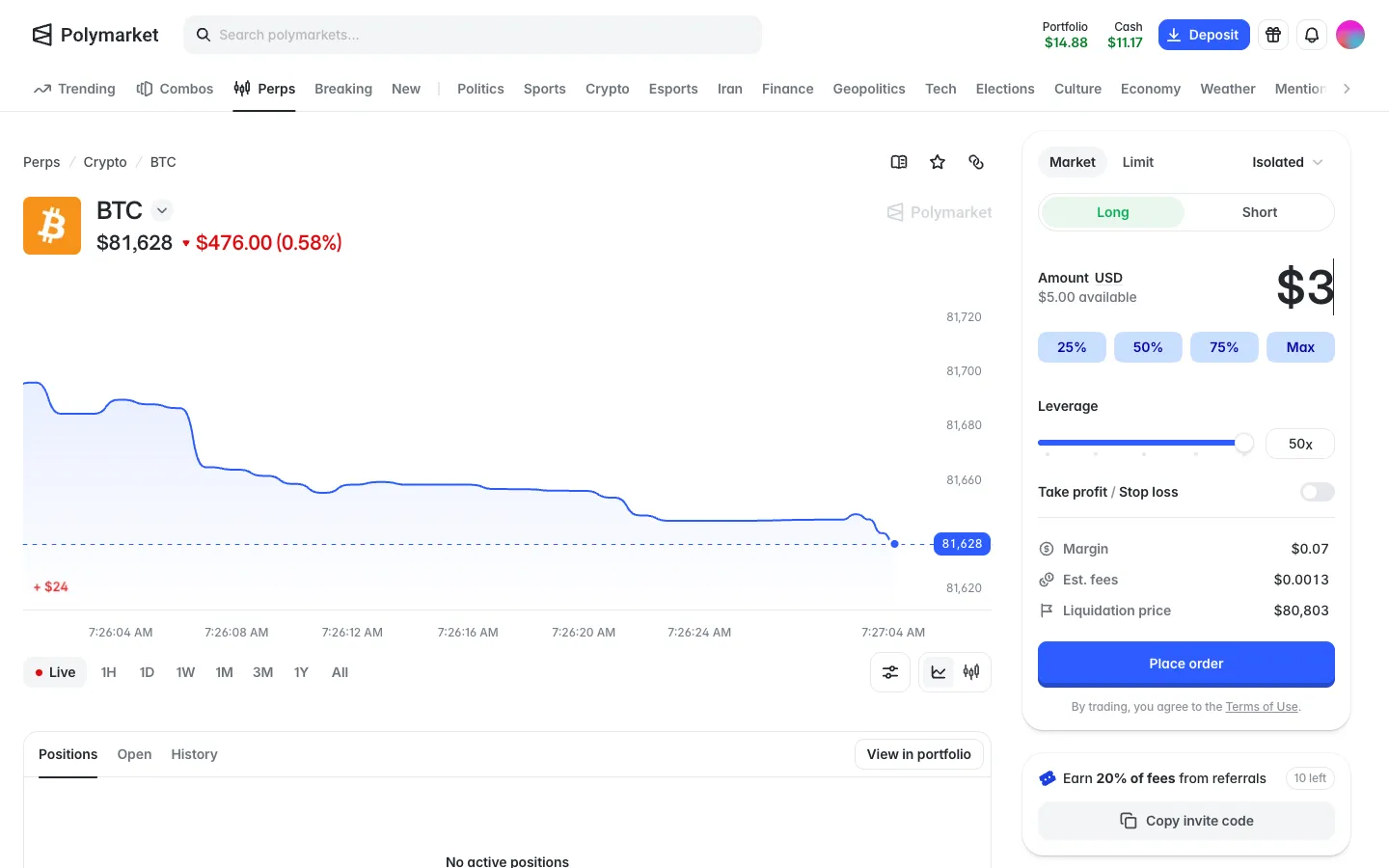
3 dollars at the default 50x, margin 7 cents, liquidation 1 percent below the price
1 / 3Does well: It moves as you drag, so you can pick an amount you'd survive.
Gets wrong: The $10 minimum only shows up after you press Place order, so your first try fails for no clear reason.
There's more where these came from: every screen in the library that says “Liquidation”.
What to design for
So keep the danger in sight, and give people a way back.
Related
- CollateralSomething you put down so you can borrow, like a deposit, which the app can sell if its value falls too far.
- LeverageYou trade with borrowed money on top of your own, so every price move hits you several times harder.
- Mark priceThe price the app uses to value your open trade and decide whether to close it, which isn't always the last sale.
- Stop lossAn order you set ahead of time that sells for you if the price falls to your level, so the loss stops there.