What it is
A perp lets you bet on a coin's price for as long as you like. You put down some money and pick a side: up or down. You win or lose as it moves, and pay a small cost while it's open. You never own the coin, only the bet.
You'll also hear them called perpetual futures or perpetual swaps. Ordinary futures end on a set date, and perps don't, so they carry a funding rate. If the price moves too far against you, the app closes the trade for you: a liquidation.
Example
Say you think ETH will rise, so you put down $100. The app lets you trade as if it were three times that, which is called leverage. Two days later ETH is up a little, and you're ahead about $15. Then you forget about it for a week, and ETH drifts back down. Now you get back $98, a little less than you put in. If you'd closed on day two, you'd have kept the gain.
In the apps
One app shows a real trade, start to finish, the other an order form.
 Hyperliquid
Here's a real bet of a few dollars on Hyperliquid, that a coin called HYPE would rise, closed after a small dip.
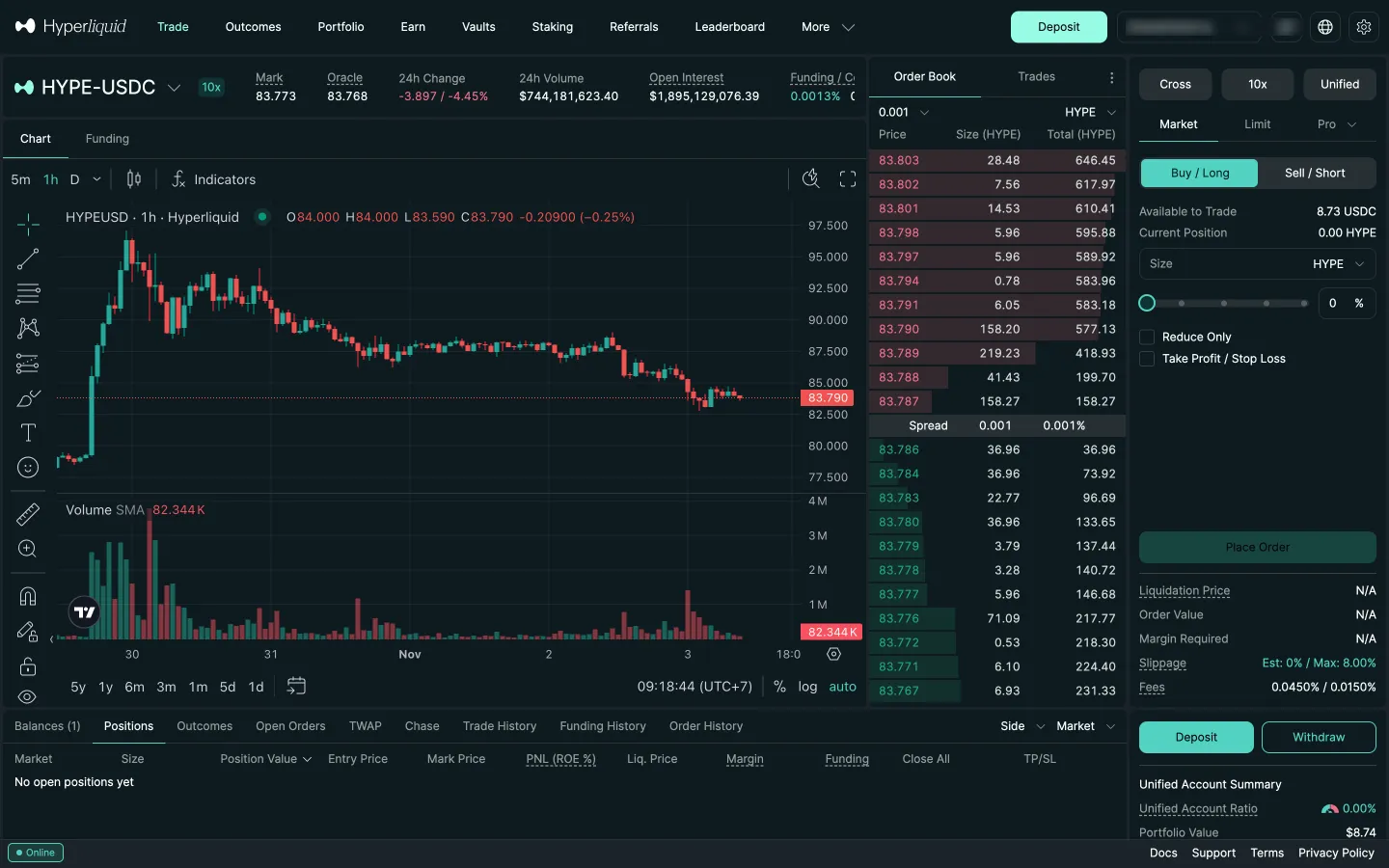
Trade ticket with 10x leverage
1 / 5Does well: Before you place the order, the form shows the price where you'd be closed out, so you know what's at stake.
 Jupiter
On Jupiter, the up and down buttons come first on the order form.
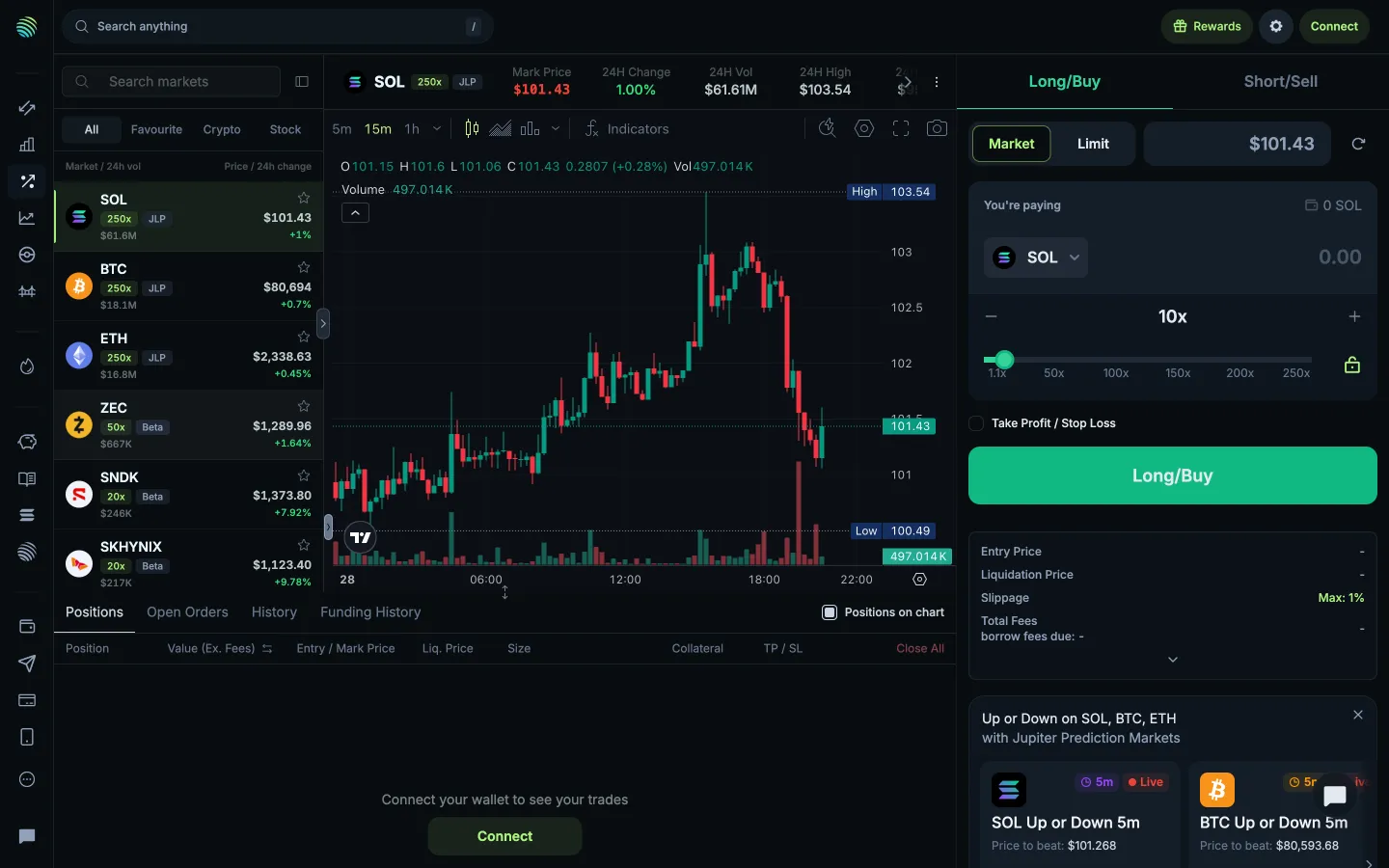
Review the unfilled perpetual ticket
1 / 13Does well: Past 150 times your money, a warning appears above the button, so nobody goes that far unwarned.
Gets wrong: The note on the holding cost says when it's charged, not how much, so you can't tell what a day costs.
There's more where these came from: every screen in the library that says “Perps”.
What to design for
A perp stays open until someone closes it, so keep its running cost in view.
Related
- Funding rateA small payment, every few hours, between people betting a price goes up and people betting it goes down.
- LeverageYou trade with borrowed money on top of your own, so every price move hits you several times harder.
- Mark priceThe price the app uses to value your open trade and decide whether to close it, which isn't always the last sale.