What it is
Projects don't hand out all their tokens on day one. Early people get a promise, and the tokens arrive in pieces over time. Until a piece arrives, you can see it, but you can't sell or move it. Seeing a number on the page doesn't mean it's yours yet.
You'll also hear it called a release schedule or a lockup. The cliff is the wait before anything arrives. An unlock is the moment tokens free up, often for everyone at once.
Example
Say you join a project, and it promises you 1,200 tokens over one year. First comes a wait, called a cliff. For three months you get nothing. Then a first batch arrives all at once. After that, a few more arrive every month, until all 1,200 are yours. If you leave before the wait is over, you usually walk away with nothing. So the end of the wait is the date to remember.
In the apps
One app sets these schedules up, another shows them to buyers.
 Sablier
Setting up a schedule on Sablier starts with ten shapes, each a curve of how the tokens come out.
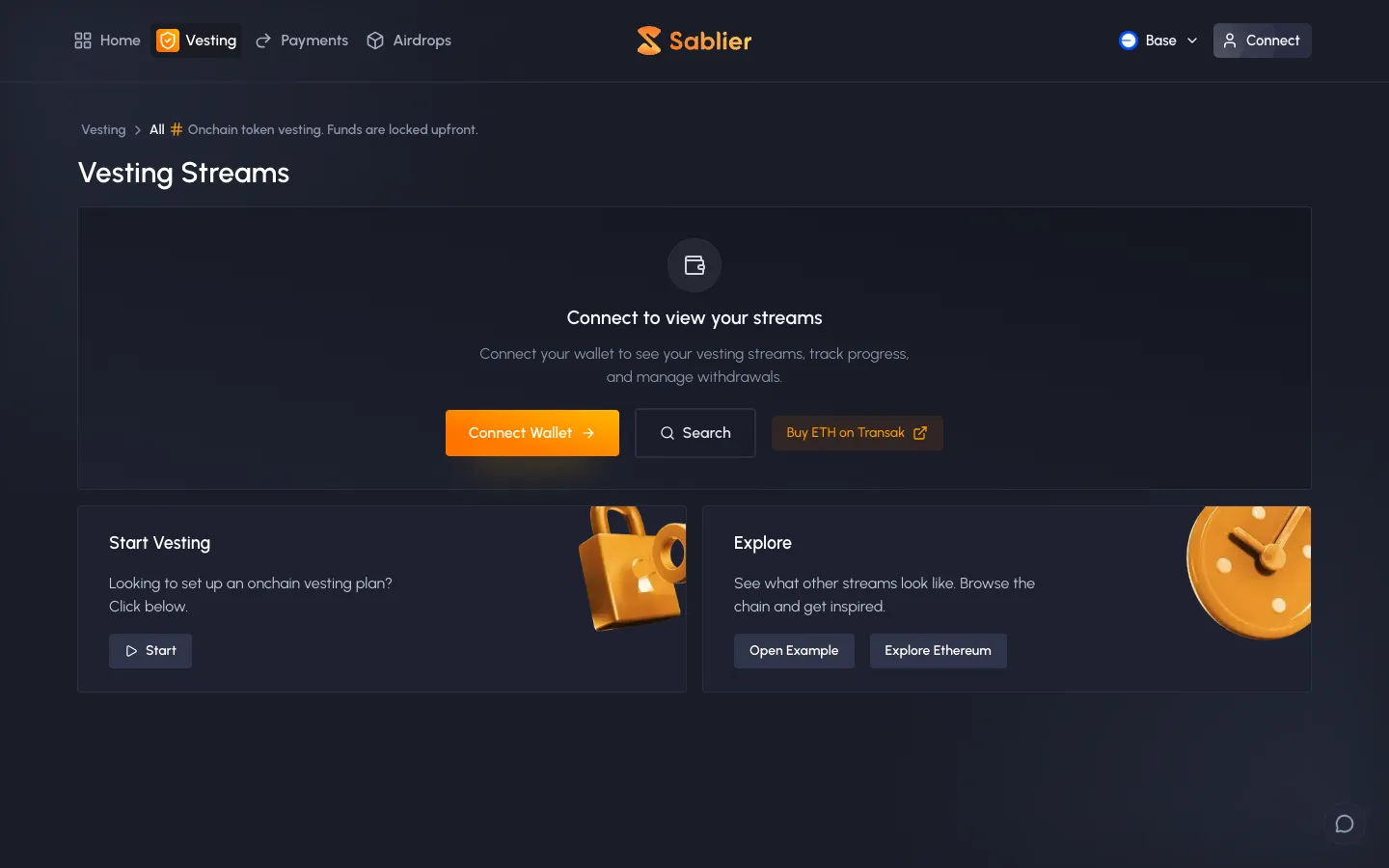
Vesting streams
1 / 6Does well: Someone who's never heard the word cliff understands it from the shape, so nobody signs a schedule they misread.
Gets wrong: Confirm a length of zero, and the window just closes, so you can't tell what went wrong.
Sablier, when it's canceled
When a schedule on Sablier is stopped early, it says so.
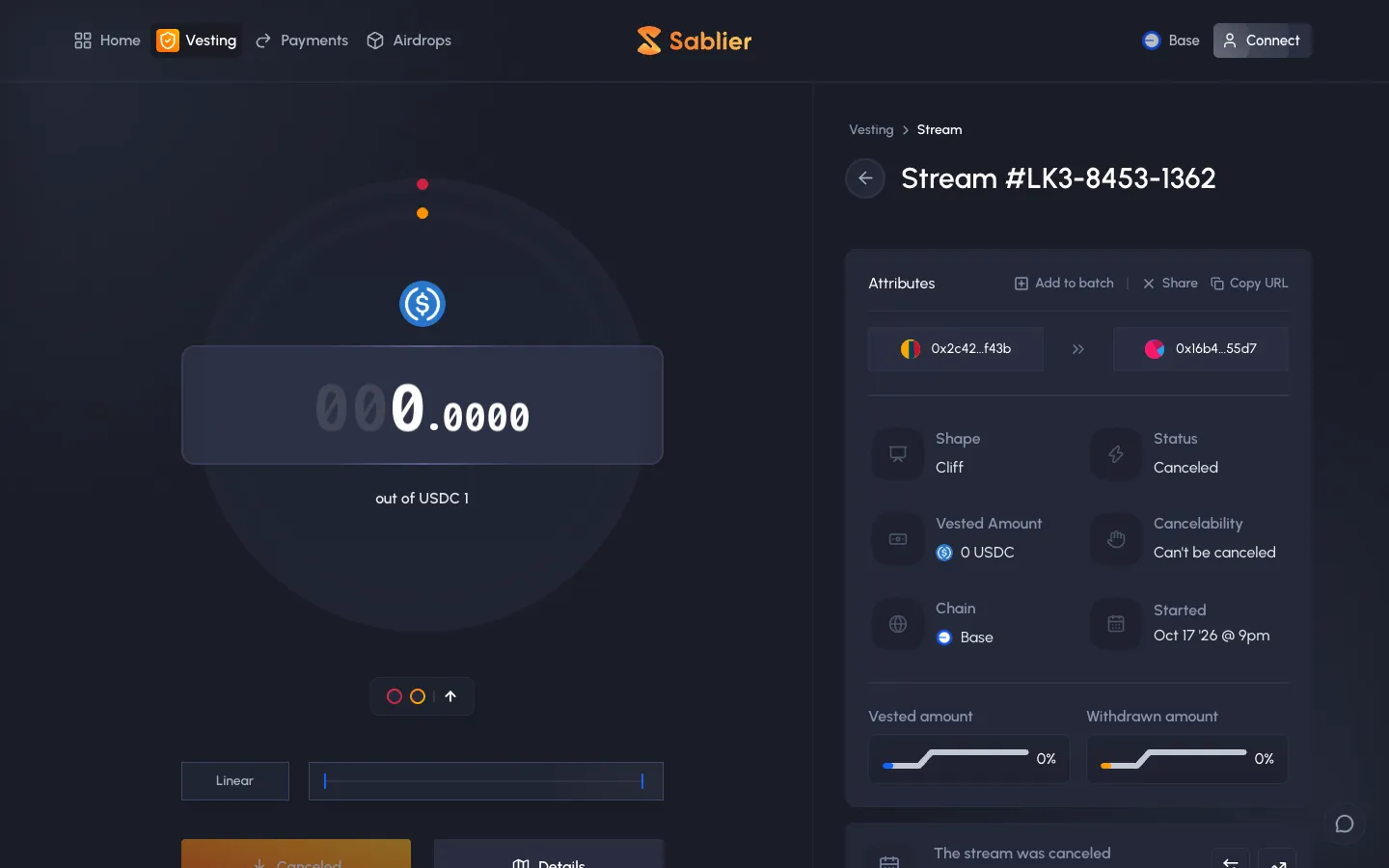
Does well: The status and the button both read Canceled in plain words, so nobody waits for tokens that won't come.

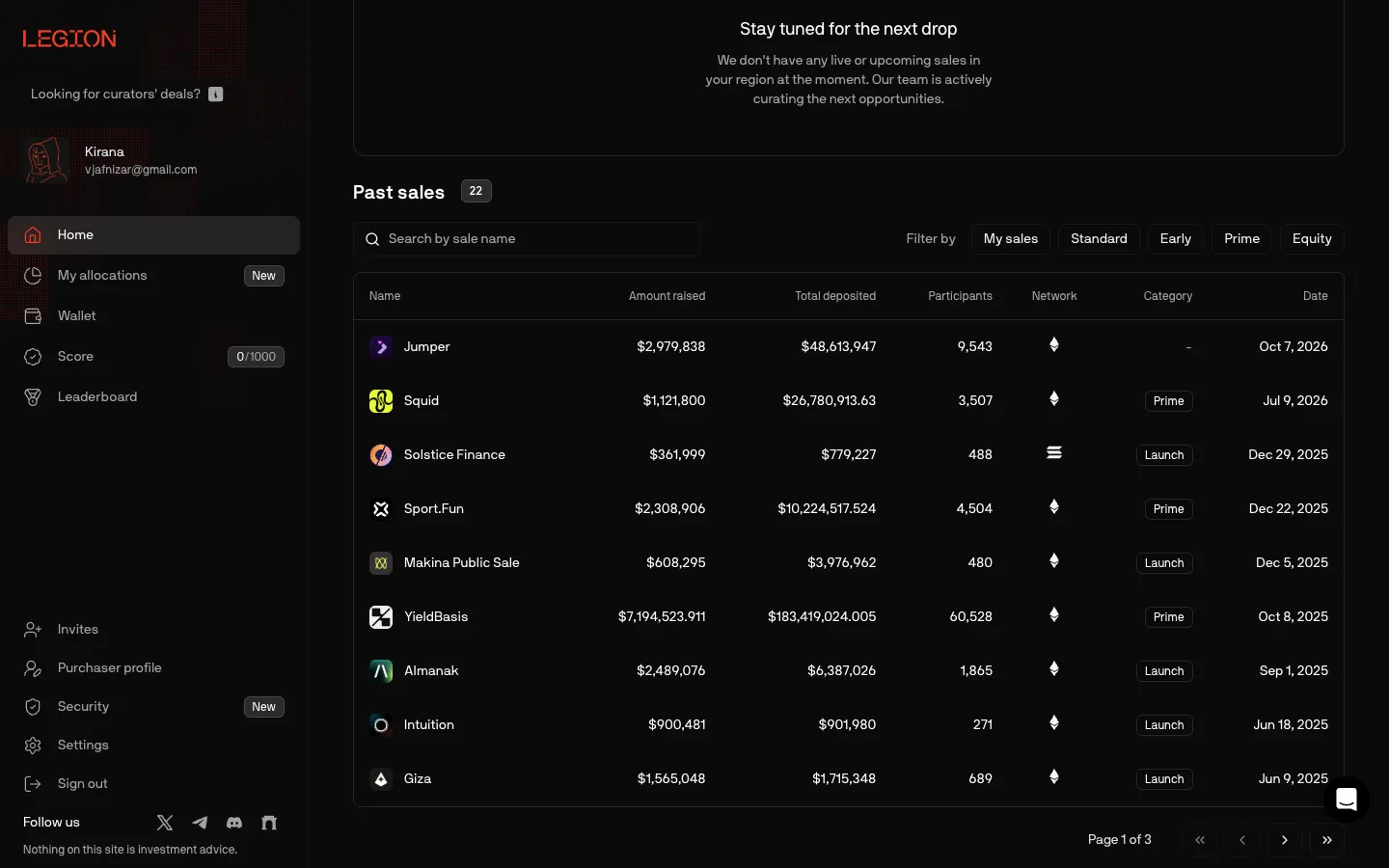
There's more where these came from: every screen in the library that says “Vesting”.
What to design for
Whoever is waiting on tokens wants two answers: when, and how much.