What it is
When you stake, you hand your tokens over to help keep a network running, and it pays you for that. You still own them, but you can't spend them while they're working. Getting them back usually takes days, not seconds. And staking isn't a savings account. If the token's price falls, what you staked falls with it.
You'll also hear it called delegating, or locking. Delegating means you stake with someone else's computer, as on Hyperliquid, and liquid staking hands you a receipt token you can still spend. Taking your tokens back is called unstake.
Example
Say you have $1,000 of a token called SOL. You stake it, and the app says it should earn about $50 over a year. Every few days, a little more SOL shows up next to your balance. Then one day you need the money. You press the button to take it back, and the app says it will take a few days. The $50 was real, and so is the wait. Had you known, you could have kept a little aside.
In the apps
Both apps here show what you'd earn, but neither shows the wait plainly.
 Jupiter
, a Solana app, works out what your stake would earn as you type the amount.
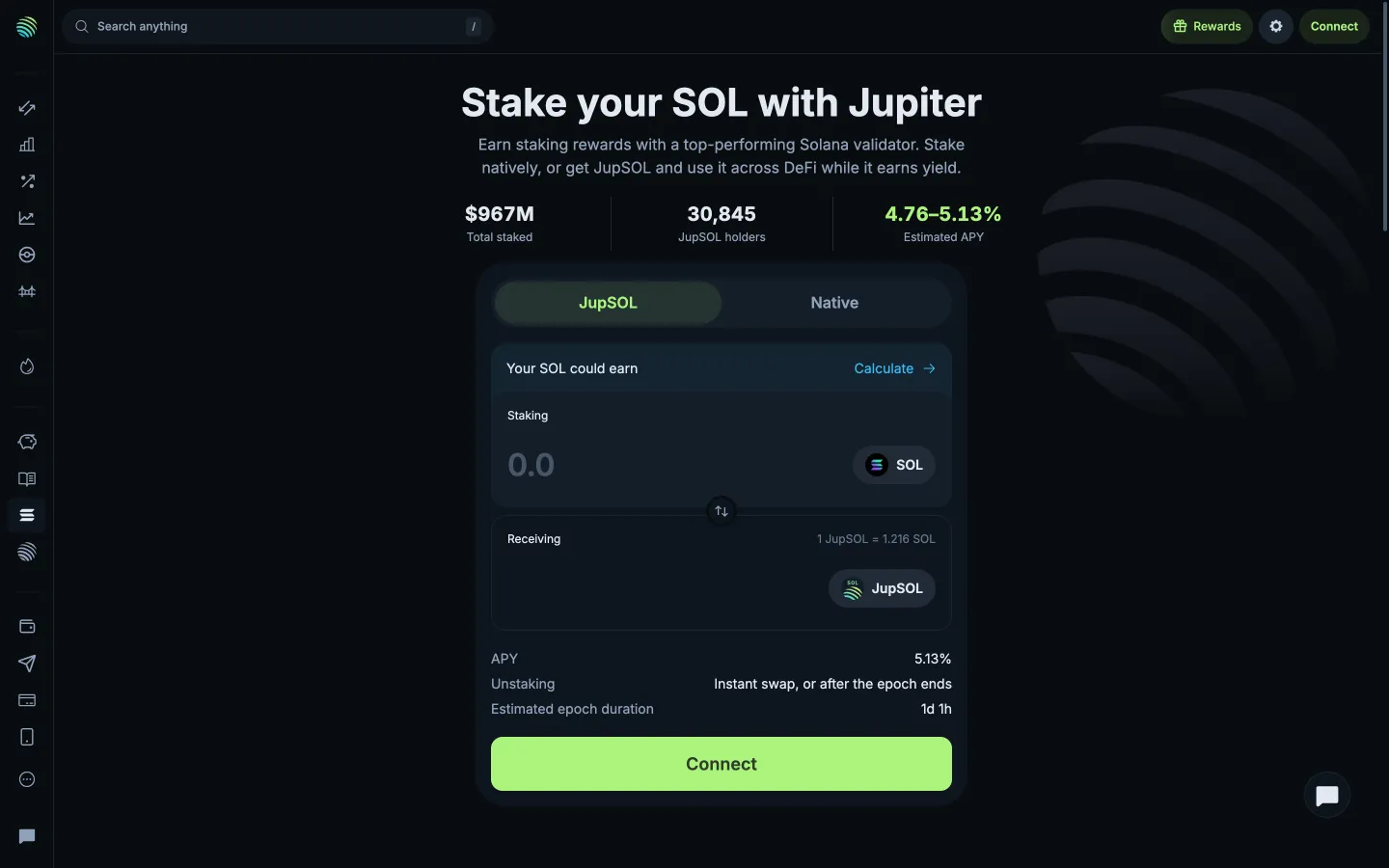
Open staking reward estimate
1 / 3Does well: Typing 1 SOL shows about $5 a year, with a line about getting out right below, so you see the reward and the way back together.
Gets wrong: The wait is called the end of an epoch, a word most newcomers have never heard, so they can't tell if it means an hour or a month.
 Hyperliquid
On Hyperliquid, the staking page lists your balance and the computers you can stake with, called validators.
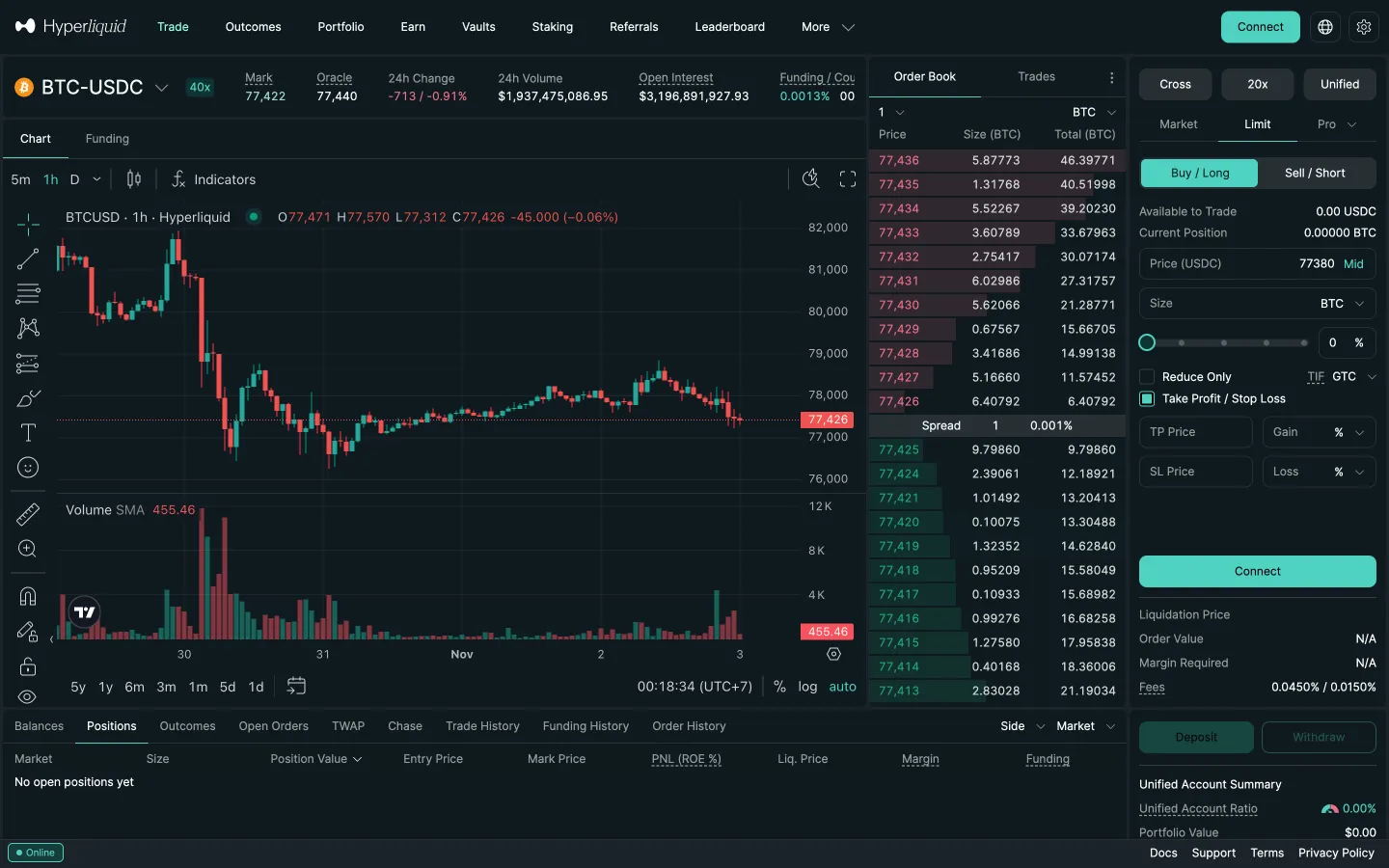
Perp detail, Staking in the top bar
1 / 3Gets wrong: The seven day lock only appears when you hover over a small line, so most people stake without ever seeing it.
There's more where these came from: every screen in the library that says “Stake”.
What to design for
So put the reward and the wait side by side, before anyone stakes.