What it is
Crypto lenders don't check your credit. Instead, you put something down first, like a deposit, and borrow less than it's worth. If it loses too much value, the app sells some of it. It isn't a payment, though: pay back the loan, and all of it comes back.
You'll also hear it called margin, mostly in a leverage trade. The point where selling starts is the liquidation threshold, and crossing it brings a liquidation.
Example
Say you put down $1,000 of ETH and borrow $500 of USDC, a stablecoin that stays at one dollar. The app only lets you borrow part of what your ETH is worth, so there's a line you can't cross. Then the price of ETH falls, and your deposit is only worth $650. You're close to the line now. Put down a little more ETH, or pay back some of the loan. Either one gives you room again.
In the apps
Two lending apps show that line, one as a number and one as a bar.
 Morpho
 puts the line right on the form where you borrow against bitcoin.
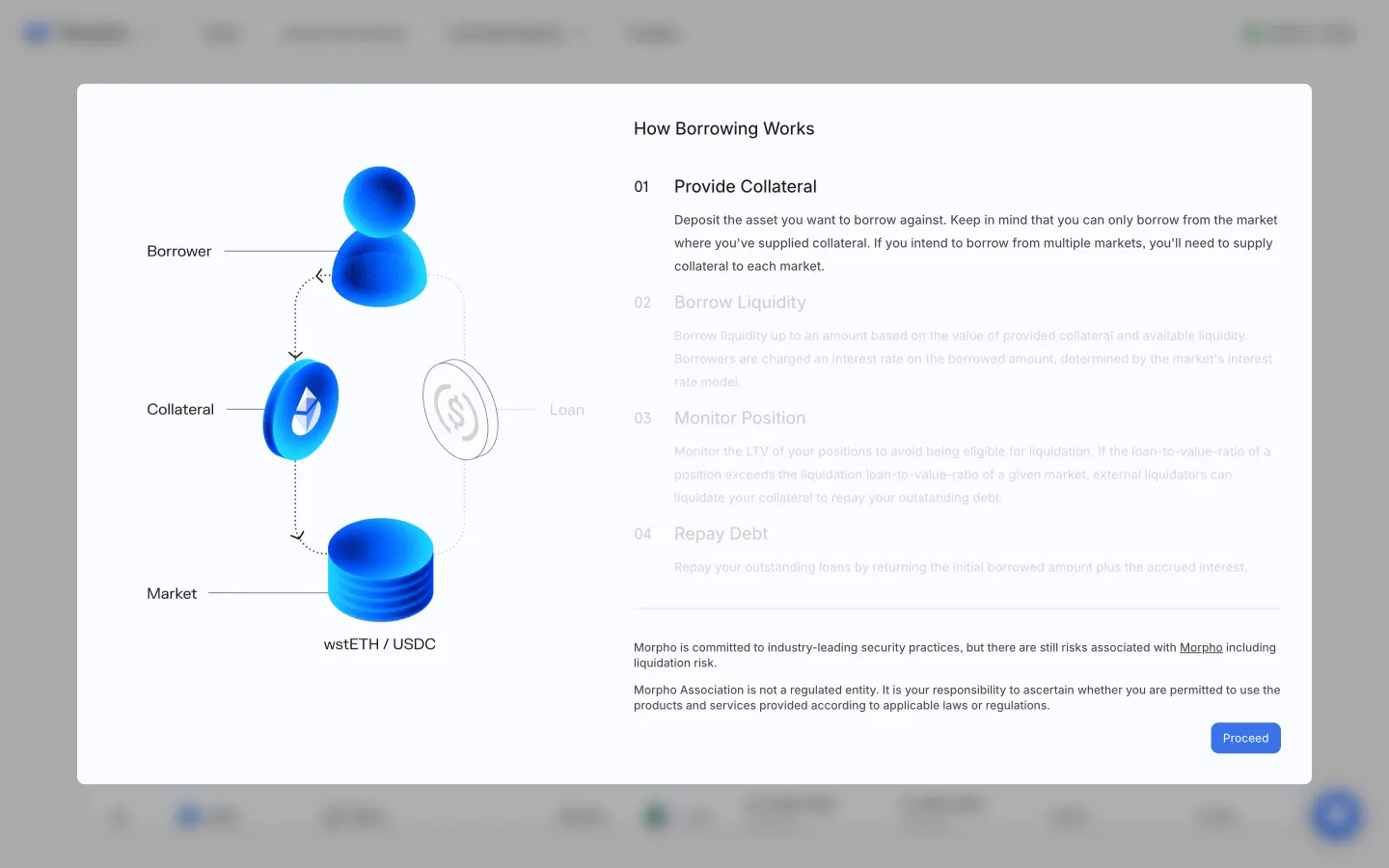
Learn how borrowing works
1 / 3Does well: The form stacks your deposit and your loan, with the line right under them, so you see how close you are before you borrow.
Gets wrong: But it labels them with short codes, and repeats one number with no label, so a newcomer can't tell which is the danger line.
 Jupiter
 Lend draws the same rule as a bar, from Safe at one end to its line at the other.
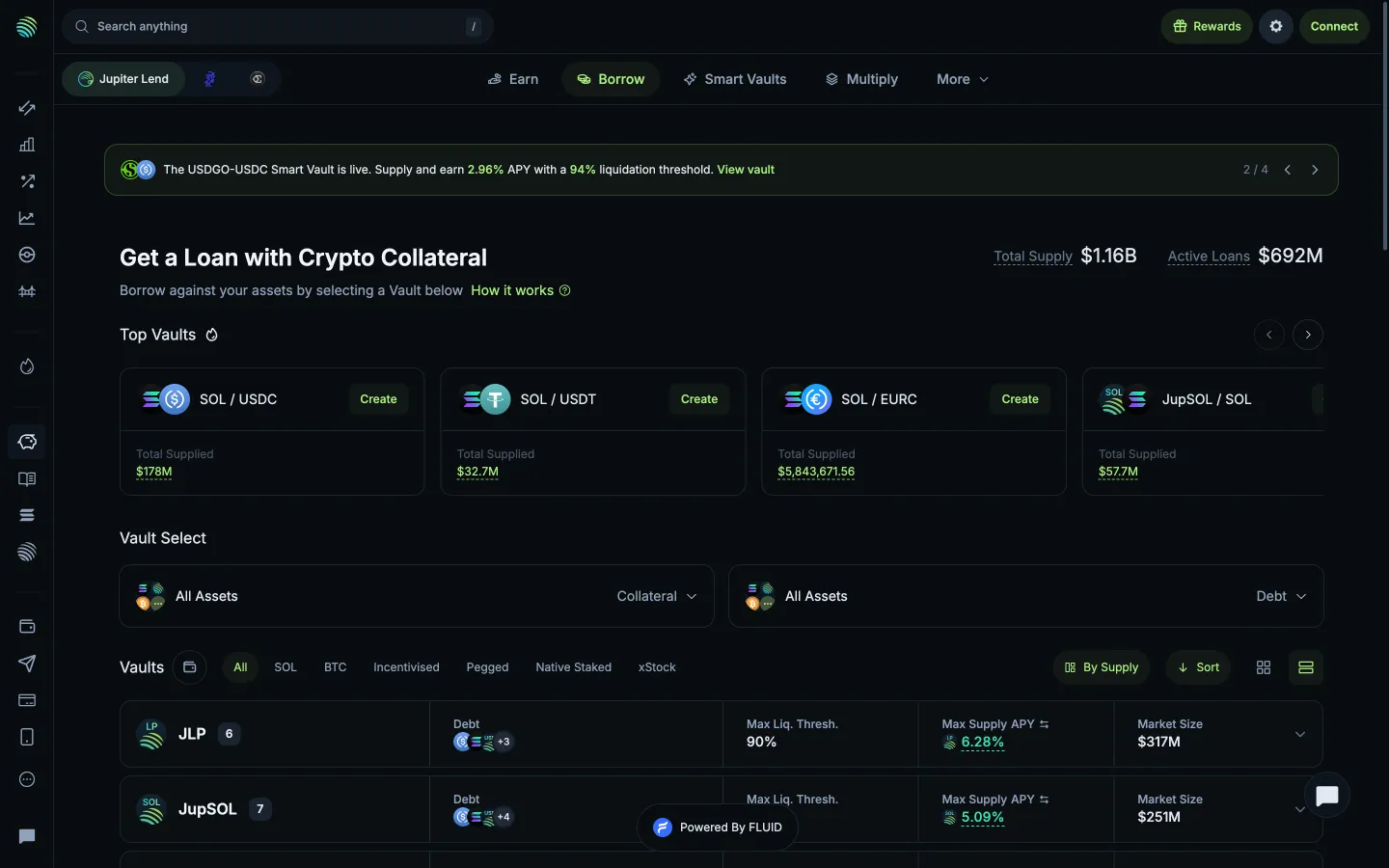
Explore borrowing vaults
1 / 3Gets wrong: The end of the bar reads like a code, and nothing says selling starts there, so the number that matters most is the hardest to read.
There's more where these came from: every screen in the library that says “Collateral”.
What to design for
A borrower wants to know how far away the line is, so keep it in sight.
Related
- LeverageYou trade with borrowed money on top of your own, so every price move hits you several times harder.
- LiquidationThe app sells some of what you put down for a loan, because its value fell too far.
- StablecoinA token built to stay worth one unit of regular money, usually one US dollar, so your balance holds still.