What it is
Some trades never end, and this payment keeps their price close to the real one. When more people bet up than down, the up side pays the down side, every hour or every eight hours. It isn't a fee to the app, though, so sometimes you're the one getting paid.
You'll also hear it called funding, or the funding fee. When it's below zero, the down side pays instead. It's tied to the mark price, the price that decides when you're closed out.
Example
Say you bet $10,000 that bitcoin goes up. Most people agree, so your side pays. The rate is 0.01% every eight hours, which sounds like nothing. On your trade, it comes to about $3 a day. Keep it open for a month, and that's around $90, even if the price never moves. If you'd seen it as dollars a day, you'd have closed sooner.
In the apps
Both apps show the same tiny hourly rate, but explain different things.
 Hyperliquid
 puts the rate in its top bar, and a Funding tab charts the last month.
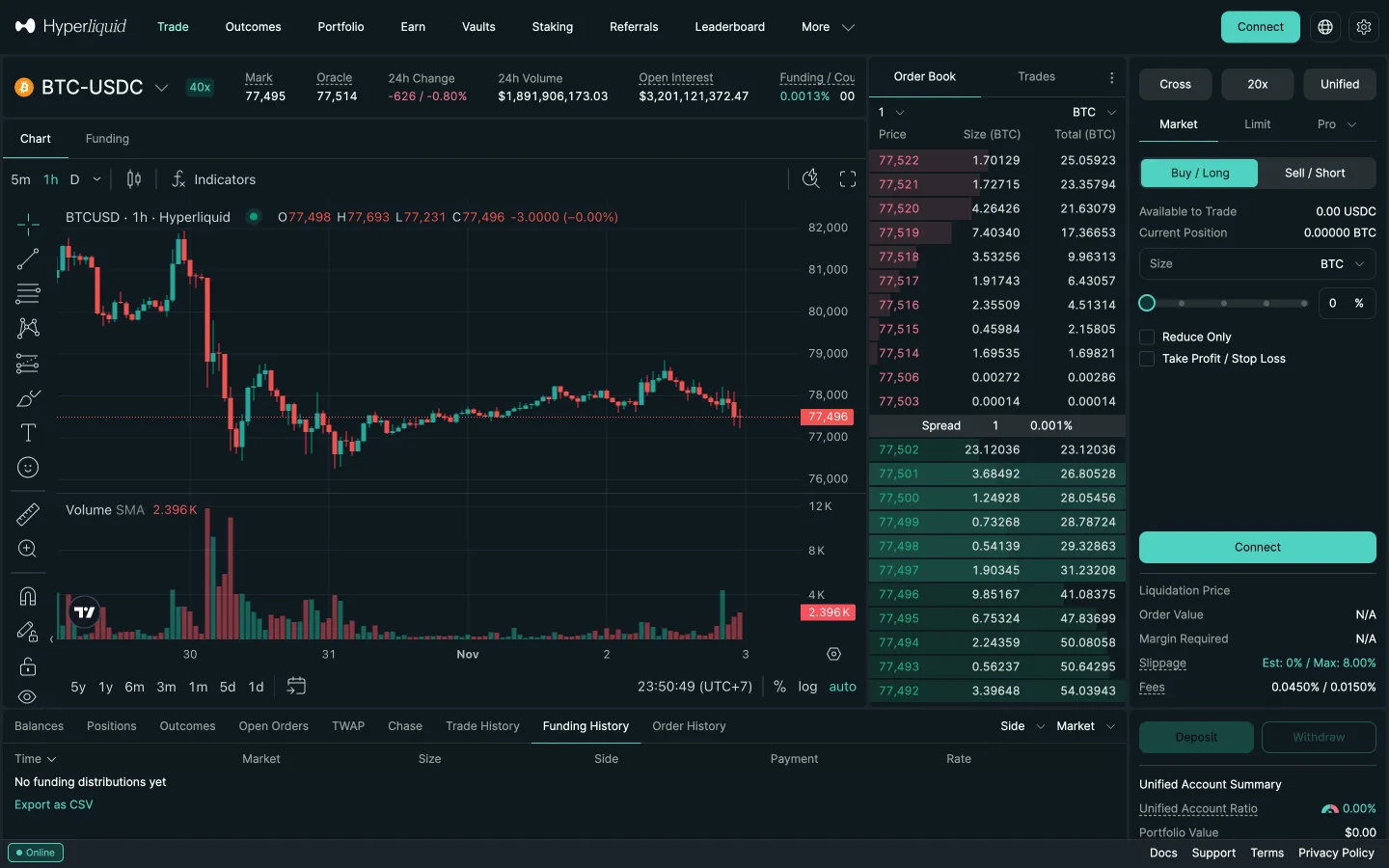
Perp detail, Funding tab
1 / 3Does well: Hover on the label, and one sentence says which side pays, so you know where you stand.
Gets wrong: At this window size the top bar cuts off the countdown, so you can't see when the next payment comes.
 Jupiter
 puts a countdown to the next payment right beside its hourly rate.
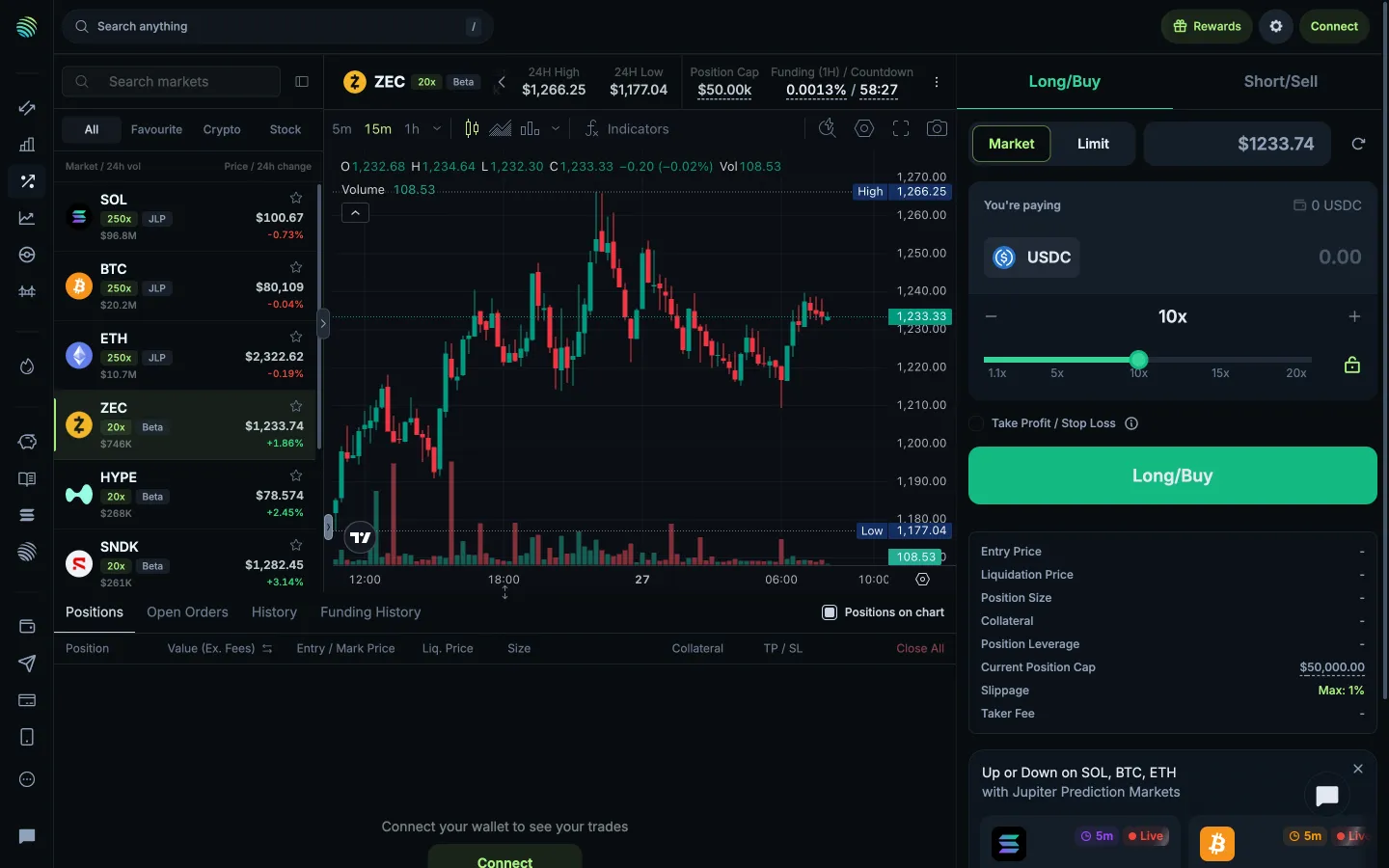
Beta funding rate and countdown
1 / 2Does well: The label says how often you pay, so the payment never surprises you.
Gets wrong: Its note says when, but not who pays or how much, so you work out the money yourself.
There's more where these came from: every screen in the library that says “Funding rate”.
What to design for
A rate this small looks harmless, so the screen has to turn it into money.