What it is
APY tells you what your money grows to in a year if you leave everything in. Each small payment joins your deposit, so the next one is a little bigger. That's why it reads higher than the apr of the same deal. It isn't a promise, though. Most crypto rates change every day, so the year is a guess.
You'll also hear it called the yield, or the compounded rate. Some apps show a net APY, after their fee is taken. What tells it apart from APR is that your earnings earn too.
Example
Say you put $1,000 into a lending app at a 10% rate. Each day a small payment is added to your deposit, and it starts earning too. You leave it all alone. A year later you have about $1,105, so the app shows it as 10.5% APY. Taking the payments out instead, you'd have earned $100. When you want out, you withdraw the whole balance, earnings included.
In the apps
Both apps turn the rate into dollars before you deposit.
 Jupiter
When you open Jupiter's vault for USDC, a digital dollar, a small chart shows what an example $1,000 grows to by next year.
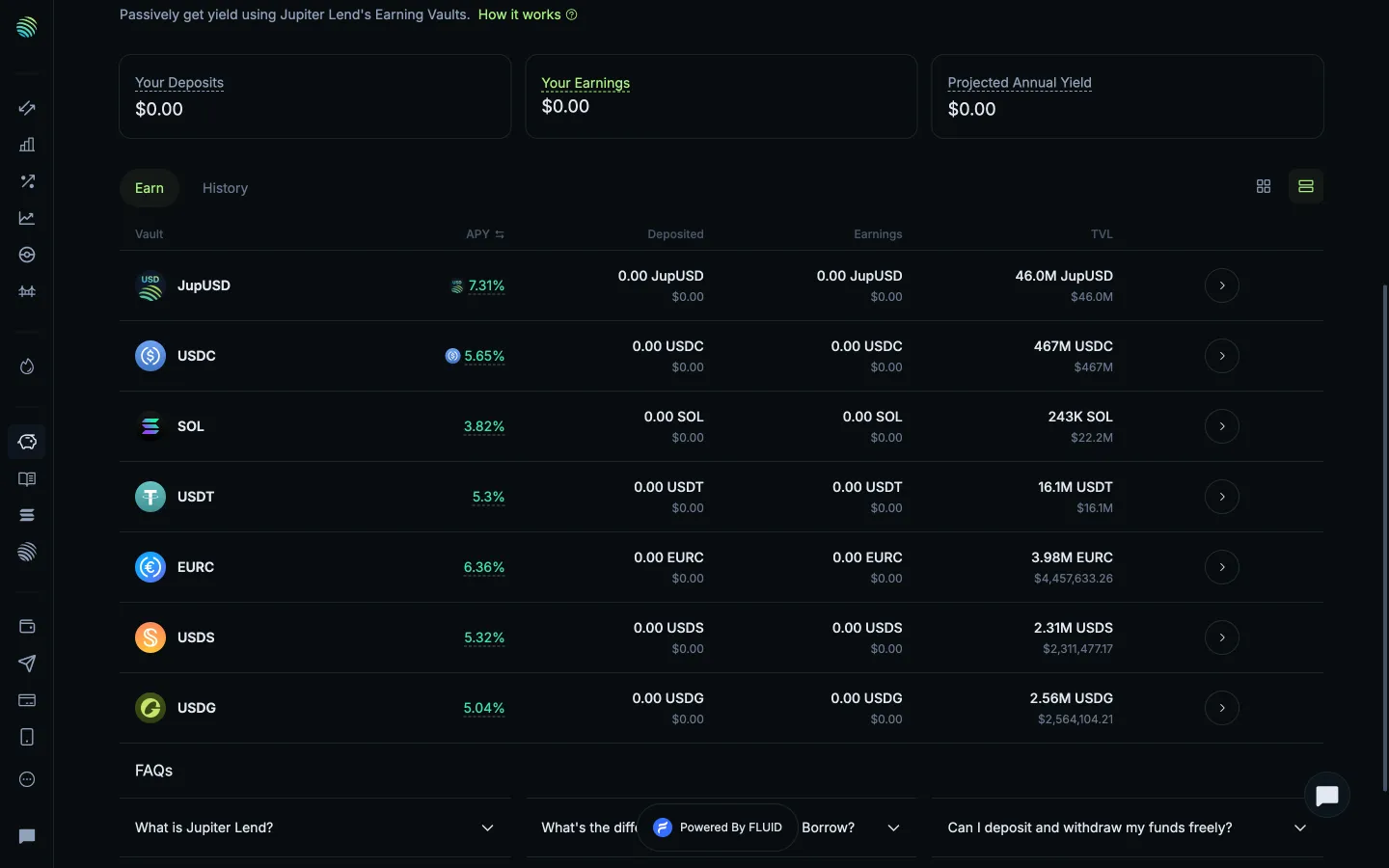
Earn vault list, USDC at 5.65 percent
1 / 5Does well: It says plus $56.53 next to the 5.65% APY, so the rate becomes money you can picture.
Gets wrong: Nothing says how often earnings are added back, so you can't tell why it beats a plain rate.
 Morpho
's vault page puts the rate up top, and the deposit box updates as you type.
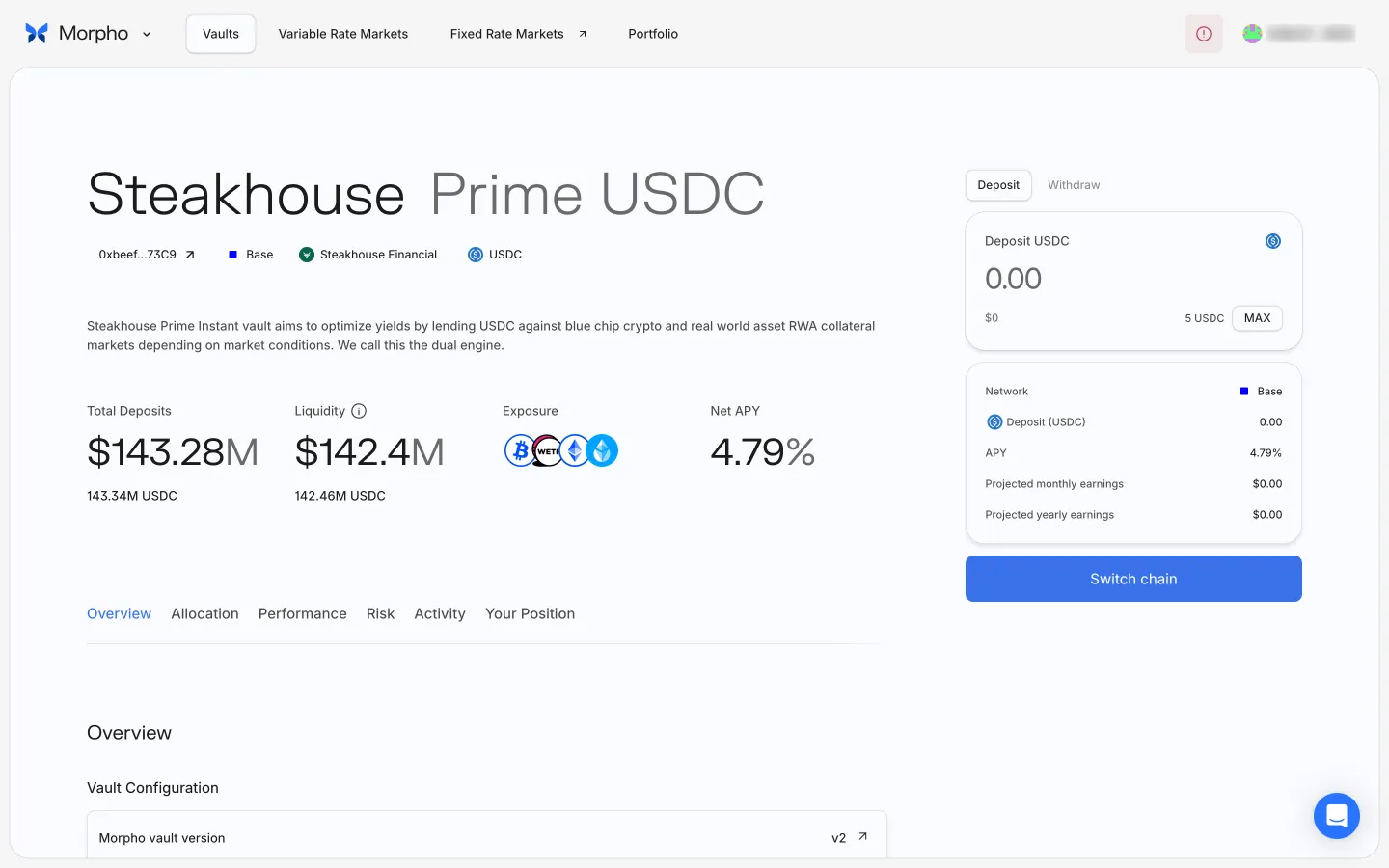
Vault on Base, wallet on another network
1 / 5Does well: Projected monthly and yearly earnings change with your amount, so you see your own number.
Gets wrong: The header says Net APY and the box says APY, with no word on what net takes out.
There's more where these came from: every screen in the library that says “APY”.
What to design for
A big yearly rate feels certain, so the screen has to show what it means and how firm it is.